
★★★★★
"I lost a molar years ago and finally got an implant here. It feels exactly like my own tooth — I can chew anything again. Dr Deepesh made the whole process stress-free."
Tooth Replacement
A permanent, natural-looking way to replace missing teeth — restoring your bite, your smile, and your confidence for years to come.
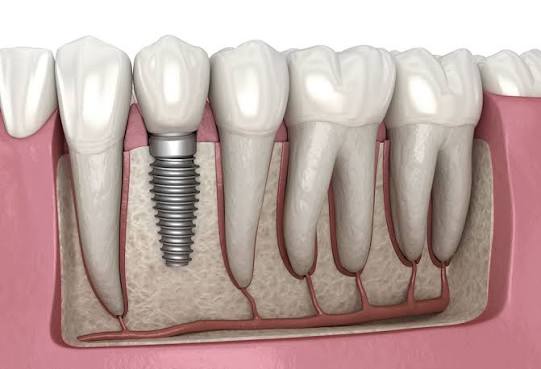
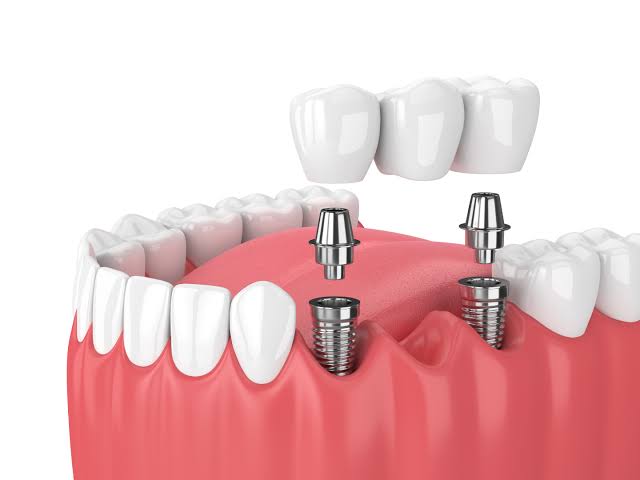
A dental implant is a small titanium post that replaces the root of a missing tooth. It is placed into the jawbone, where it gradually fuses with the bone to form a strong, permanent foundation for a replacement tooth.
Once the implant has healed, a connector called an abutment is attached to it, and a custom-made crown is fixed on top. The result looks, feels, and functions just like a natural tooth — you can eat, speak, and smile without a second thought.
Implants can replace a single tooth, several teeth, or support a full set of teeth. Because they are anchored in the bone rather than resting on the gums or clasping onto neighbouring teeth, they are widely regarded as the most durable and natural-feeling tooth-replacement option available today.
A missing tooth is about far more than appearance. Left untreated, a single gap can set off a chain of problems that affect your whole mouth over time:
A bridge is a common alternative for replacing a missing tooth, but it works very differently from an implant. Here's how they compare:
| Feature | Dental Bridge | Dental Implant |
|---|---|---|
| Adjacent teeth | Healthy teeth beside the gap must be filed down to support the bridge | Stands on its own — neighbouring teeth are left untouched |
| Jawbone health | Does not stimulate the bone; bone loss continues under the gap | Acts like a natural root and helps preserve the jawbone |
| Longevity | Typically 7–10 years before it needs replacing | Can last 15+ years, often a lifetime with good care |
| Feel & function | Good, but not fully independent of surrounding teeth | Closest option to a natural tooth in look and feel |
| Upfront cost | Lower initial cost | Higher upfront, but often better long-term value |
A bridge can still be the right choice in some situations. During your consultation, Dr Deepesh Agrawal will help you weigh both options based on your oral health, bone, and budget.
Getting a dental implant is a carefully planned process that usually takes place over a few months, mostly to allow natural healing. Watch the short walkthrough below, then read what to expect at each stage.
A step-by-step look at how a dental implant is placed.
Your journey begins with a thorough examination. Dr Agrawal checks the health of your gums and remaining teeth and takes digital X-rays or a 3D scan to assess the quantity and quality of your jawbone.
This planning stage confirms whether you're ready for an implant straight away or whether a preparatory step — such as a tooth extraction or a bone graft to build up thin bone — is needed first. You'll receive a clear, personalised treatment plan and cost estimate before anything begins.
On the day of surgery, the area is numbed with local anaesthesia so the procedure is comfortable and essentially painless. A small opening is made in the gum, and the titanium implant post is gently placed into the jawbone.
Placing a single implant usually takes under an hour. The gum is then closed over or around the implant, and you'll be given simple aftercare instructions to follow while it heals.
Over the next few months, a natural process called osseointegration takes place — the jawbone grows around and fuses with the implant, locking it firmly in place.
This healing period typically lasts 3–6 months and is what gives an implant its exceptional strength and stability. In the meantime, a temporary tooth can often be provided so you're never left with a visible gap.
Once the implant has fully integrated, a small connector called an abutment is attached to it. This is a quick, minor step that creates the link between the implant below the gum and the crown that will sit above it.
An impression or scan of the area is then taken so your final crown can be made to fit your bite precisely.
Finally, your custom-made crown — shaped and shaded to match your natural teeth — is securely fixed onto the abutment. Dr Agrawal checks that it fits comfortably and that your bite feels even.
You leave with a complete, natural-looking tooth that's ready to use right away. With that, your implant treatment is complete.

Good aftercare protects your investment and helps your implant last as long as possible. A few simple habits make all the difference:
₹30,000 – ₹50,000 per implant
The cost of an implant depends on the implant brand and materials, the type of crown used, and whether any additional treatment — such as a bone graft or extraction — is needed. Because every mouth is different, we provide an itemised, no-obligation quote after your consultation, so you always know exactly what you're paying for.
Implants often prove to be excellent long-term value: they rarely need replacing and help protect your jawbone and remaining teeth from future problems. Ask us about flexible payment options during your visit.
Prices are indicative and confirmed only after an in-person examination.
"I lost a molar years ago and finally got an implant here. It feels exactly like my own tooth — I can chew anything again. Dr Deepesh made the whole process stress-free."
"I was very nervous about implant surgery, but there was no pain at all. The clinic is spotless and every step was explained clearly. Highly recommended."
"Replaced my old bridge with two implants. Best decision — they look completely natural and the pricing was transparent from day one."
No. The procedure is carried out under local anaesthesia, so you won't feel pain during placement. Most patients report only mild soreness for a day or two afterwards, which is easily managed with regular pain relief.
Placing the implant takes under an hour, but the implant then needs about 3–6 months to fuse with the jawbone before the final crown is fitted. In some cases faster or single-sitting options may be possible — Dr Agrawal will advise during your consultation.
With good oral hygiene and routine checkups, implants can last 15+ years and often a lifetime. The crown on top may occasionally need replacing after many years of use.
Most adults with one or more missing teeth and healthy gums are good candidates. Adequate jawbone is needed to support the implant; if bone is limited, a bone graft may be recommended. A quick examination will confirm your suitability.
This is common where a tooth has been missing for a while. A bone graft can rebuild the area so it can securely hold an implant. Dr Agrawal will check your bone with a scan and explain your options.
Just like a natural tooth — brush twice a day, floss daily, and visit us for regular checkups and cleanings. Avoiding smoking is especially important for long-term implant health.
Book a consultation with Dr Deepesh Agrawal to find out if dental implants are right for you — and get a clear, personalised treatment plan and quote.
Malviya Dental Assistant
Powered by AI